A hydrothermal vent archaeon survived and produced methane in a lab mixture modeled on Enceladus’s alkaline ocean, broadening the chemistry scientists may test for.
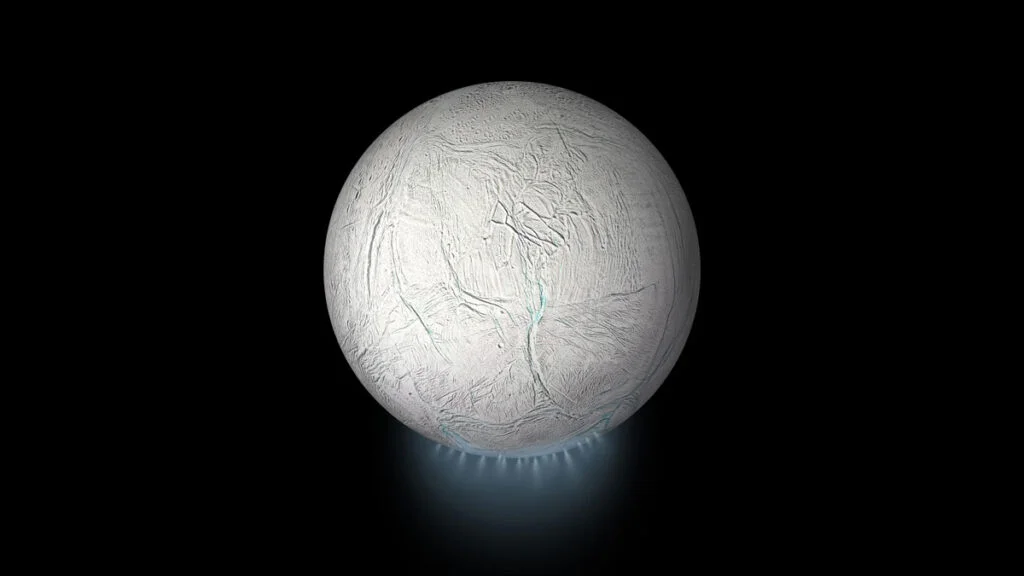
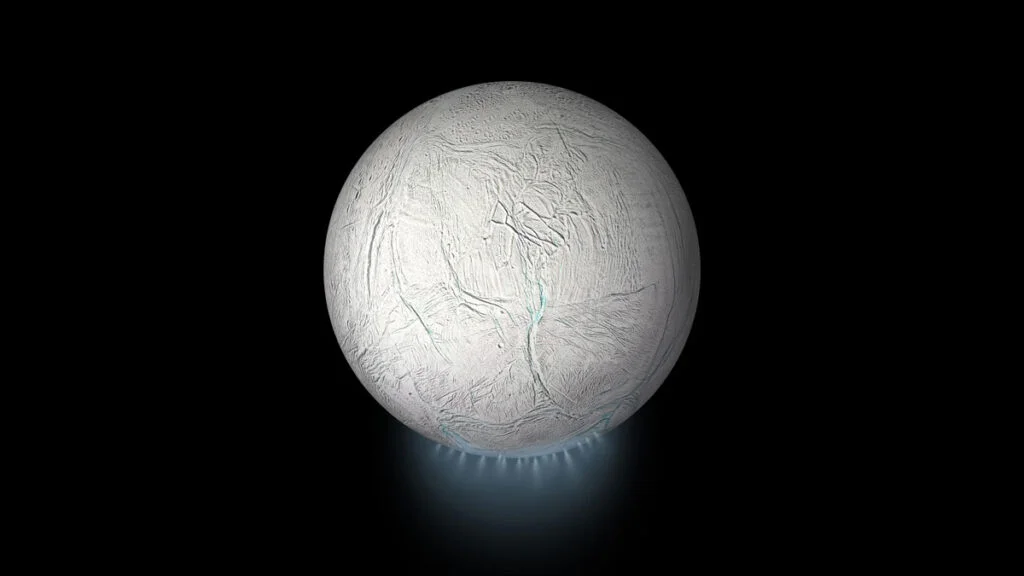
A methane-producing microbe from Earth managed to survive, reproduce, and release methane in a laboratory mixture designed to mimic parts of Enceladus’s ocean. The result doesn’t show that life exists on Saturn’s moon, but it makes the case that its unusually alkaline, carbon-poor water may still support some familiar microbial chemistry.
The study, led by geobiologist Vanessa Helmbrecht of Ludwig-Maximilians-Universität (LMU) in Munich, tested Methanothermococcus okinawensis, an archaeon collected from a hydrothermal system in Japan’s Okinawa Trough. The team reported its findings in Science Advances in September.
Testing a difficult ocean
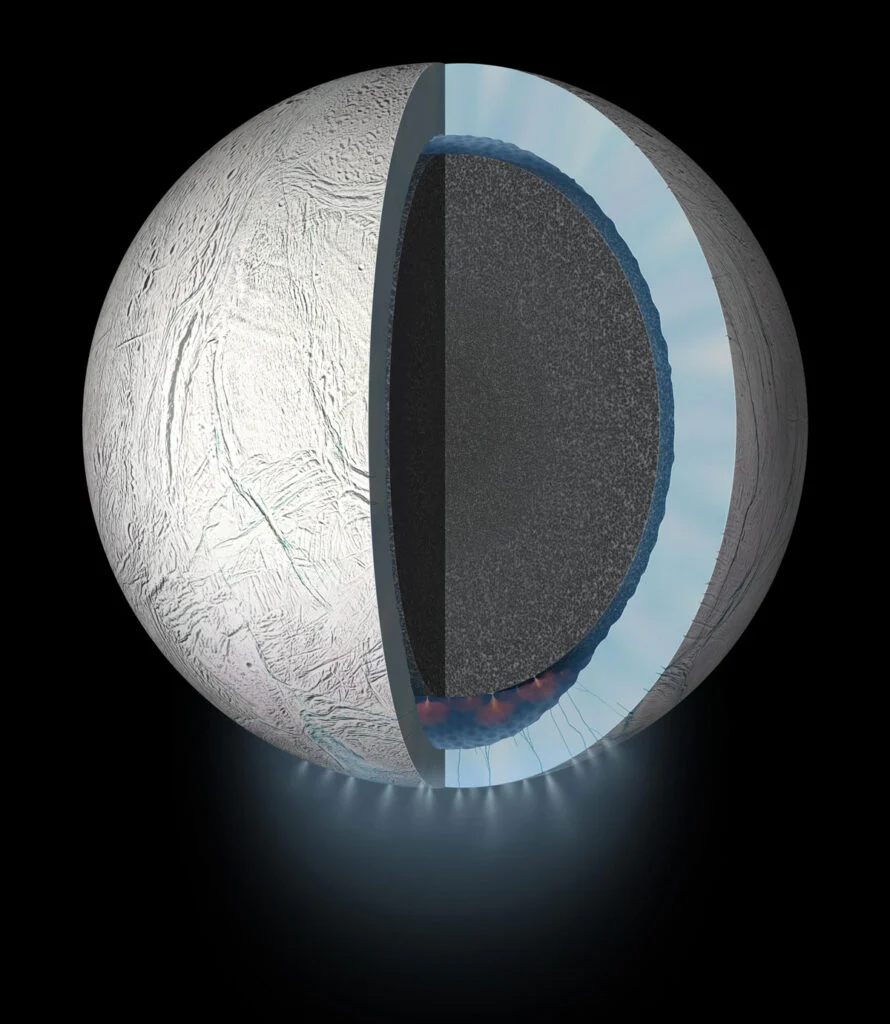
Enceladus has drawn astrobiologists’ attention since NASA’s Cassini spacecraft sampled material from its south polar plume in 2015. The measurements pointed to a liquid ocean beneath the moon’s ice, containing dissolved inorganic carbon (DIC), molecular hydrogen (H2), and methane (CH4). Those ingredients matter because microbes called methanogens can consume hydrogen and carbon compounds, then release methane.
Earth offers a possible comparison: some microbes living around hydrothermal vents on the seafloor use H2 and DIC to grow. Both substances have been detected in Enceladus’s plume, and earlier research suggests that serpentinization—a reaction between water and rock—could generate H2 on the moon’s seafloor.
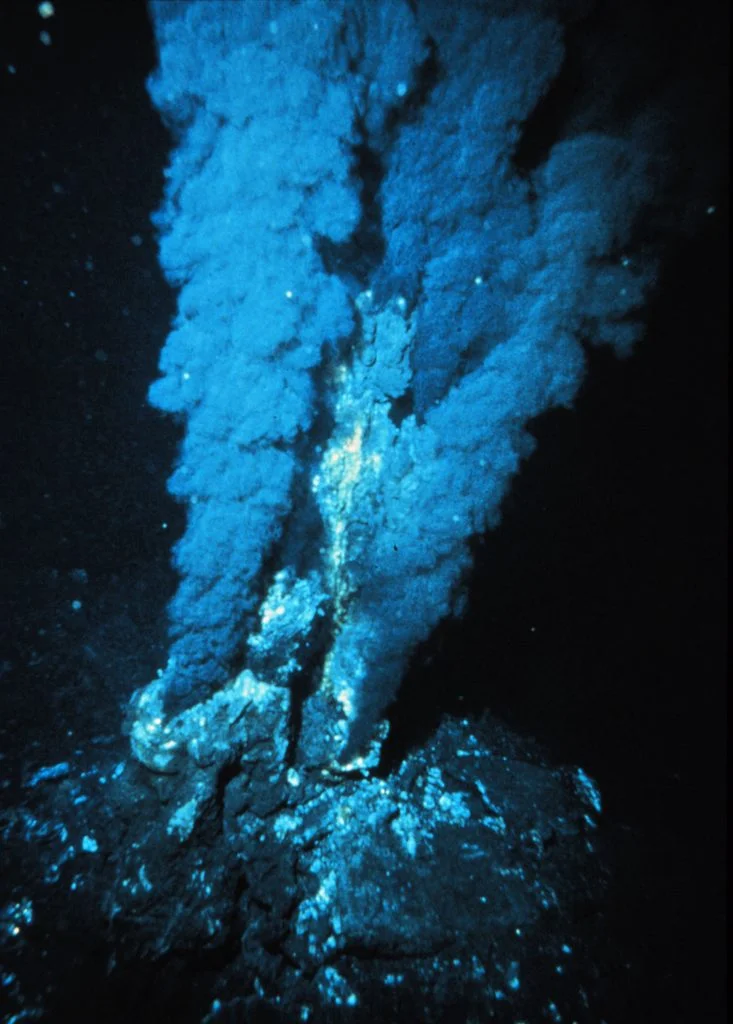
The chemistry poses a serious test. Estimates put the ocean’s pH between 8 and 11.6, making it far more alkaline than Earth’s seawater. At high pH, much of the DIC takes forms that organisms may struggle to use. The ocean is also thought to contain little dissolved carbon dioxide (CO2), a carbon source methanogens need.
The researchers chose M. okinawensis because it already grows at pH 8.5. Archaea include organisms found in settings such as hot springs, acidic mine drainage, and hydrothermal vents; all methanogens belong to this group, though most archaea aren’t methanogens. “Archaea are known to be among the oldest cellular organisms that we know from Earth. They are quite ancient,” Helmbrecht said.
“If we had to pick one methanogen archaea that could grow in super alkaline conditions in Enceladus, this might be the one.”
That made the species a useful candidate for testing more extreme conditions. “We thought, ‘Well, if we had to pick one methanogen archaea that could grow in super alkaline conditions in Enceladus, this might be the one,’” said coauthor William Orsi, an LMU geomicrobiologist.
Survival came with a cost
The team prepared lab mixtures reflecting Enceladus-like ocean chemistry, possible pH levels, and the effects of serpentinization. They introduced the archaeon and monitored the cultures in 48-hour periods. In the simulated ocean, it survived, multiplied, and produced methane at pH levels as high as 11. Comparable control mixtures at the same pH saw the populations die out sooner.
The result points to a possible explanation for how the microbes could cope with scarce CO2: serpentinization may supply enough H2 to support methane production. The finding also suggests that pH alone is a poor measure of habitability. As Berne put it, “the study reframes habitability in terms of the combined pH, DIC, and H2 content of the ocean rather than pH alone, which directly informs the chemical measurements we are considering for future missions to Enceladus.”

The organisms showed signs of stress in the most alkaline mixtures, and their populations grew more slowly than they did at lower pH. “They weren’t necessarily happy,” Orsi said. At high pH, “they didn’t like it, but they grew anyways.”
Helmbrecht said the experiments widen the known limits for M. okinawensis and leave open the possibility that familiar life could persist in Enceladus’s ocean. The team wants to find out whether the archaeon could adapt to high pH over time and whether a more complex community could survive there.
That possibility rests on an assumption: life on Enceladus might share Earth’s chemistry. Helmbrecht cautioned that extraterrestrial organisms could use different energy sources and biological pathways. For now, she said, “we have to assume a common ground.” The lab results support that approach: “We now have all the necessary elements that we need to [support] Earth-like life,” she said. “We have a liquid solvent, which is water, we have all the building blocks to make it. So, assuming that [life] looks like ours, it could potentially happen.”
For future Enceladus missions, the practical takeaway is to measure the chemistry as a system: pH, DIC, and hydrogen together may say more about microbial prospects than any one reading alone.
—Kimberly M. S. Cartier (@astrokimcartier.bsky.social), Staff Writer


Discussion
Sign in to join the discussion.