CT scans suggest the Cretaceous dinosaur processed soft, pit-bearing fruits, offering clues to how ancient birds and flowering plants evolved.
A beaked dinosaur with a taste for fruit
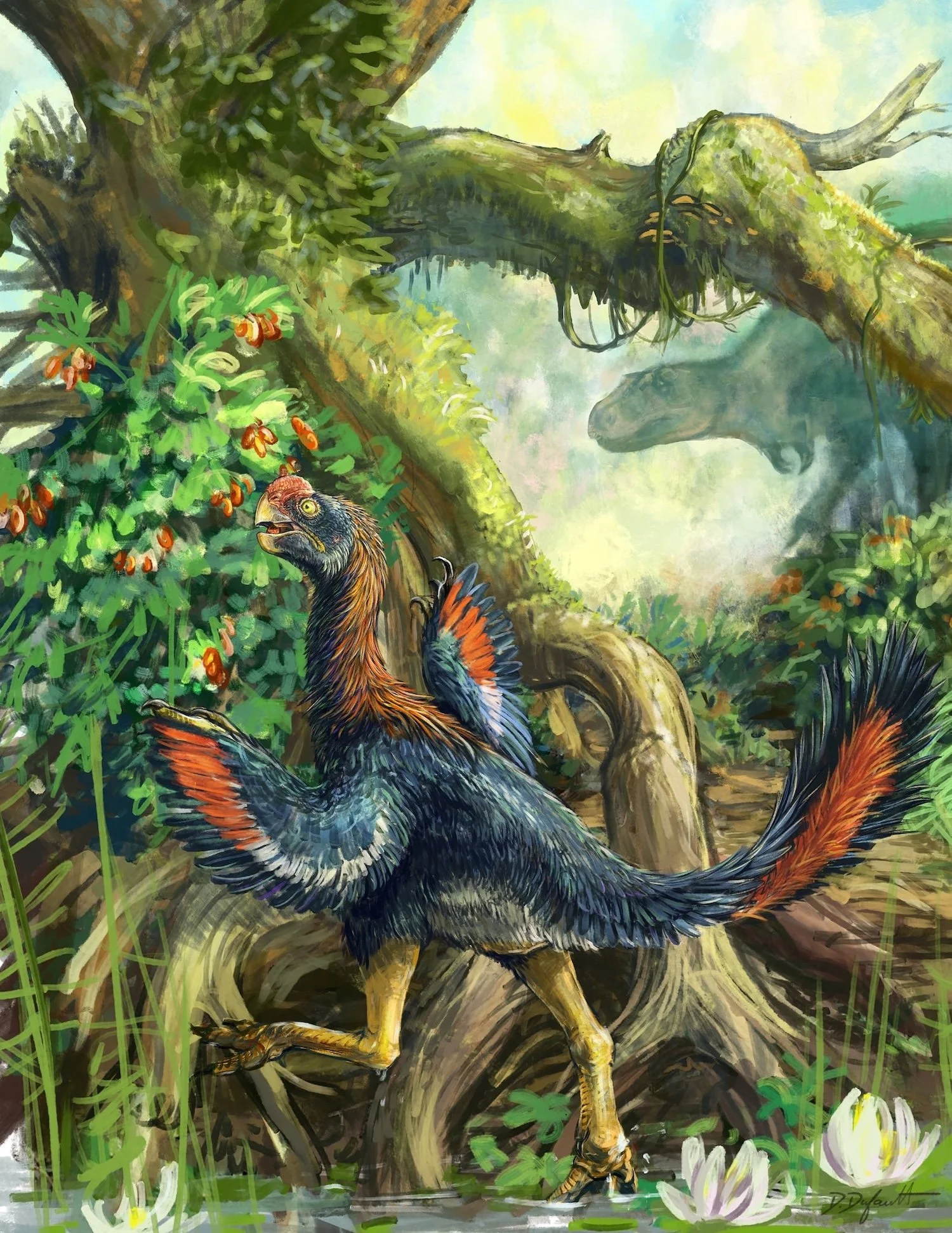
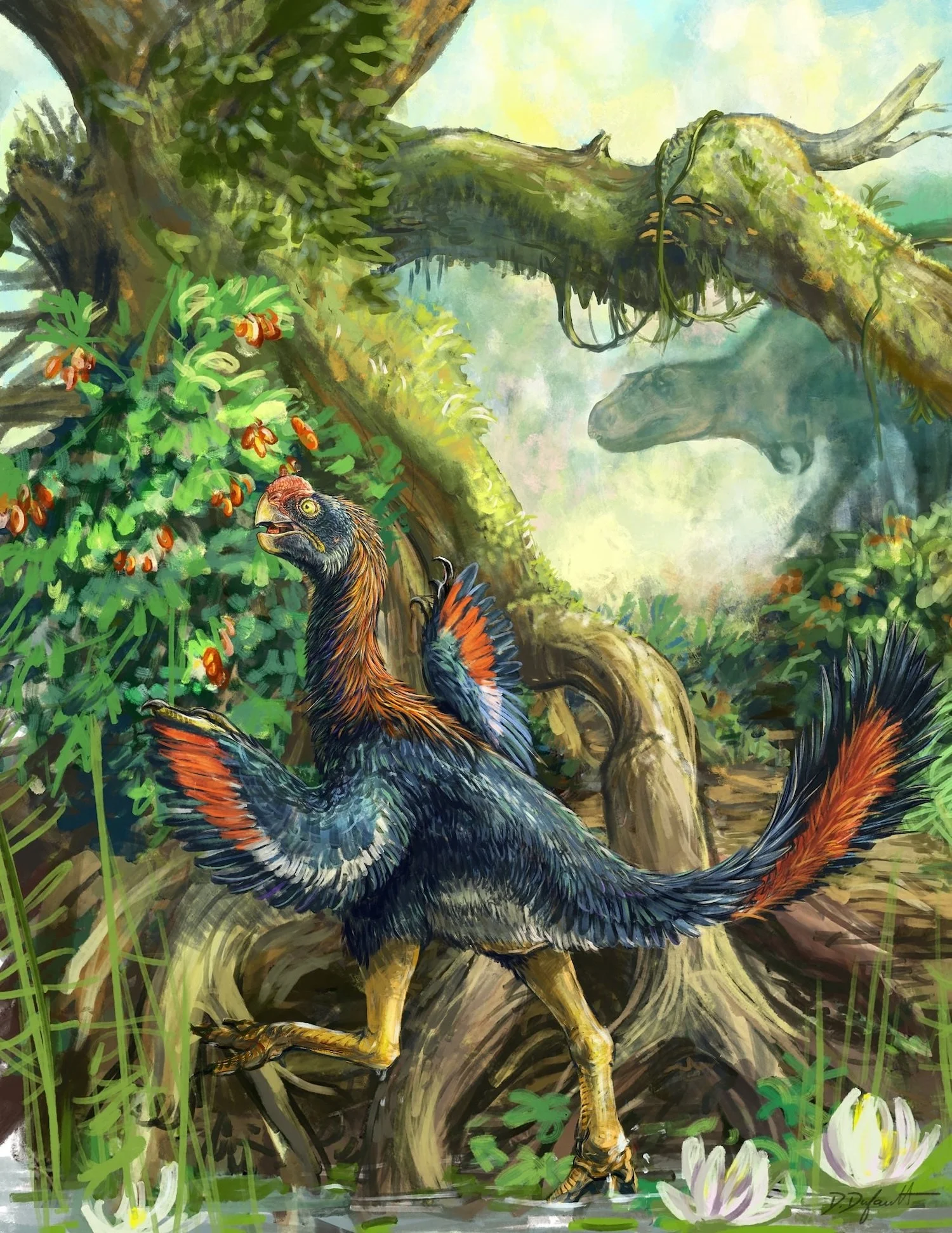
The so-called “hell chicken” may have been better equipped for fruit than for meat. A study in Nature Communications finds that Infernogallus jamesi had a jaw suited to crushing soft fruit, adding a new detail to how some dinosaurs adapted as flowering plants spread. The finding offers a clue about what this small dinosaur could eat, though it doesn’t establish how often fruit was on the menu.
The fossil was found in Montana’s Hell Creek Formation in 2011. I. jamesi lived around 72–66 million years ago, alongside animals such as triceratops and Tyrannosaurus rex. It belonged to the caenagnathids, a group of nonavian dinosaurs with slender bodies and toothless beaks. At roughly turkey size, it may have looked more like a large parrot than a chicken—a useful comparison for its beak, even if its body and ecology weren’t those of a modern bird.
Why this fossil offers a rare view
Caenagnathid fossils are scarce: their lightly built skeletons were less likely to survive, and many recovered bones are damaged. That makes a specimen with informative skull and jaw parts especially useful. Instead of relying on the group’s general body shape, researchers could examine features tied more directly to how I. jamesi handled food.
“Its skull fits in the palm of your hand,” said study co-author Thomas Dudgeon, a paleontologist at the Royal Ontario Museum, in an accompanying Science profile. “You can clearly see the beak; you can see where the eye used to be. It’s astonishing.” A small skull can still hold a lot of evidence, provided its structures are preserved well enough to interpret.
What the jaw suggests about its diet
Some of the skull and lower jaw had been crushed, but researchers used CT scans to reconstruct the bones and estimate how the jaw muscles worked. They compared that model with the anatomy of living birds, using those comparisons to infer how the dinosaur’s jaw might have moved. The result points to a side-to-side motion, rather than the forceful up-and-down bite typical of cutting or tearing food.
That movement would have let I. jamesi grind softer foods against its beak, much like a mortar and pestle. Researchers also found no evidence of stomach stones, which some animals swallow to help grind food internally. Taken together, the jaw mechanics and missing stones support a fruit-heavy diet, although neither clue amounts to a record of what the animal ate day by day.
“We think Infernogallus was likely adapted to process fruits called drupes—these are fruits with a hard central seed or pit, surrounded by softer flesh,” said study co-author Gregory Funston, a paleontologist at Stony Brook University. Drupes include modern fruits such as peaches and cherries. Their Cretaceous relatives may have supplied much of the dinosaur’s food, but the study’s evidence is about what its anatomy could process, not a complete inventory of its meals.
Fruit, dinosaurs, and the limits of the evidence
The finding fits a broader shift in the period: flowering plants were spreading and producing larger, fleshier fruits, while some dinosaurs had jaws capable of processing them. That overlap raises a natural question about whether dinosaurs helped those plants spread. Here’s the thing: a plausible ecological relationship isn’t the same as a demonstrated one.
The researchers don’t claim that caenagnathids and fruiting plants diversified together because one drove the other. It’s possible the dinosaurs dispersed seeds as they fed, helping those plants spread, but the fossil evidence can’t establish that. “Their role in the Late Cretaceous proliferation of fruit—which shaped early Cenozoic flora—remains unclear,” the team wrote.
(And this is the part most people overlook.) A jaw adapted to mash fruit can tell researchers about feeding mechanics without showing whether the animal swallowed seeds, carried them far, or had any measurable effect on plant populations. Those are separate questions, and the available fossil evidence doesn’t answer them.
Why the nickname may need an update
The study’s strongest contribution is specific: it adds evidence that at least one caenagnathid could process soft fruit with a side-to-side jaw motion. That’s more significant than it looks, because toothless beaks can invite broad assumptions about diet; the jaw’s mechanics offer a more focused way to test them. If you’re working in this space, the distinction matters: anatomy can narrow the possibilities, but it doesn’t recover an entire ecosystem’s food web.
The clearest takeaway is that this beaked dinosaur appears to have been built to mash fruit. How much fruit it ate, and whether it helped flowering plants spread, remain open questions. A better nickname, then? “Hell parrot.”


Discussion
Sign in to join the discussion.