The May 2024 solar superstorm significantly altered Earth’s radiation belts, revealing new insights into electron transport processes affecting satellite operations.
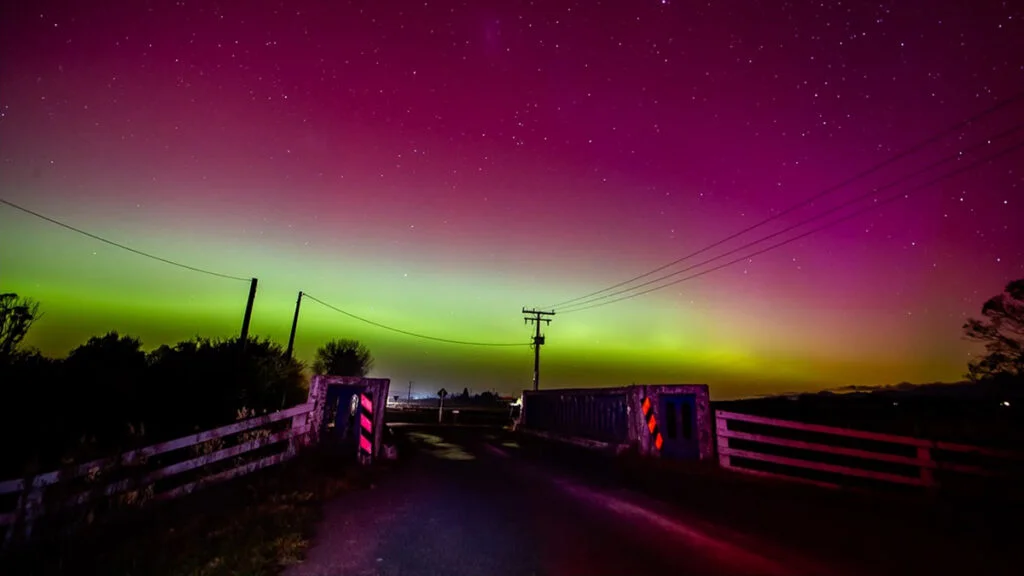
In May 2024, Earth faced its most powerful geomagnetic storm since the infamous Halloween storms of 2003. This superstorm illuminated night skies worldwide with vibrant auroras while also causing disruptions, including interference with GPS signals utilized by agricultural machinery. The storm's intensity wasn't just a visual spectacle; it served as a poignant reminder of nature’s capacity to disrupt our reliance on technology.
The Van Allen Radiation Belts: More Than Just Shields
The Van Allen belts consist of donut-shaped zones surrounding our planet, containing energetic particles primarily derived from the solar wind and captured by Earth’s magnetosphere. These regions play a critical role in shielding our planet from harmful solar and cosmic radiation. However, geomagnetic storms, such as the one that occurred in May, have been known to reconfigure the magnetosphere. This leads to rapid changes in electron behavior—shifts that pose significant risks to satellites, communication networks, and even power grids.
Despite extensive research on these threats, the complexities of electron transport during extreme storms have remained elusive. This is particularly concerning given the increasing dependence on satellite technology for everything from weather forecasting to global positioning. The May 2024 superstorm provided a rare opportunity to investigate these dynamics in detail, showing how even minor shifts in our magnetic shield can lead to substantial impacts on technology.
Analyzing Data from the Arase Satellite
Researchers tapped into data from the Japan Aerospace Exploration Agency’s Arase satellite to assess the electron depletion in the outer radiation belt during the storm. Collecting data from a high-altitude satellite offers unparalleled insight into the atmospheric behavior during such events. To understand the rapid loss of electrons better, simulations were conducted using the Versatile Electron Radiation Belt (VERB) model. This model aimed to reproduce the radiation belt's behavior and pave the way for deeper insights into electron dynamics.
In the wake of the storm, this data has proven invaluable. This isn't just about understanding past events; it's about preparing for future storms that could wreak even more havoc. With satellite data providing real-time insights, researchers can develop predictive models that are far more responsive to the immediate conditions occurring in space.
Key Processes Behind Electron Loss
The investigation revealed that two previously identified phenomena were responsible for the significant electron loss: magnetopause shadowing, which expelled electrons into space, and local wave scattering, which drew them into the upper atmosphere. Each of these processes acts differently depending on the region of Earth’s magnetic field in question, underscoring the complexities of space weather dynamics. It’s not just that electrons are lost; it’s *how* and *where* they are lost that matters.
Crucially, for the simulations to reflect the severe electron depletion accurately, the onset of outward electron transport—prompted by magnetopause shadowing—had to coincide closely with a strong compression of Earth’s magnetosphere during the storm. This compression was subsequently followed by local wave scattering. This interplay of factors highlights the intricate dance between solar phenomena and Earth’s protective mechanisms.
Implications for Future Forecasting
The standard electron transport models traditionally employed in space weather forecasting fail to capture the precise timing interactions between superstorm dynamics and electron transport processes. The adequacy of existing models has become a topic of debate; they often serve as a reactive rather than proactive measure, leaving industries vulnerable to unforeseen disruptions. The findings could lead to improvements in predictive models, enhancing the accuracy of superstorm forecasts and risk assessments. In other words, the stakes aren’t just theoretical; they affect critical sectors that rely on precision and reliability. This is more significant than it looks.
If you're working in this space, you understand that enhanced forecasting capabilities can mean the difference between a minor disruption and a catastrophic failure in satellite operations or even power grids. Research like this lays the groundwork for navigating increasingly volatile space weather, thus directly impacting how we prepare and respond.
Looking Ahead: The Future of Space Weather Research
The urgency for better forecasting models in light of escalating solar activities has never been clearer. With the lessons learned from the May 2024 superstorm, researchers are not just reflecting on the past but are also gearing up for future challenges. It’s likely that we'll see a greater investment in satellite technology and infrastructure designed to monitor these phenomena more closely.
As our dependence on technology grows, understanding the Earth's magnetic environment becomes increasingly critical. The improvements in predictive capabilities suggested by this study could lead to smarter resource management and better resilience against space weather’s unpredictability. This isn’t a race against time; it’s a necessity for survival in an era where our technological foundations are often vulnerable to the whims of space.
—Sarah Stanley, Science Writer


Discussion
Sign in to join the discussion.