Recent research reveals that certain peptides can withstand sulfuric acid in Venus' clouds, suggesting possibilities for life in extreme conditions.
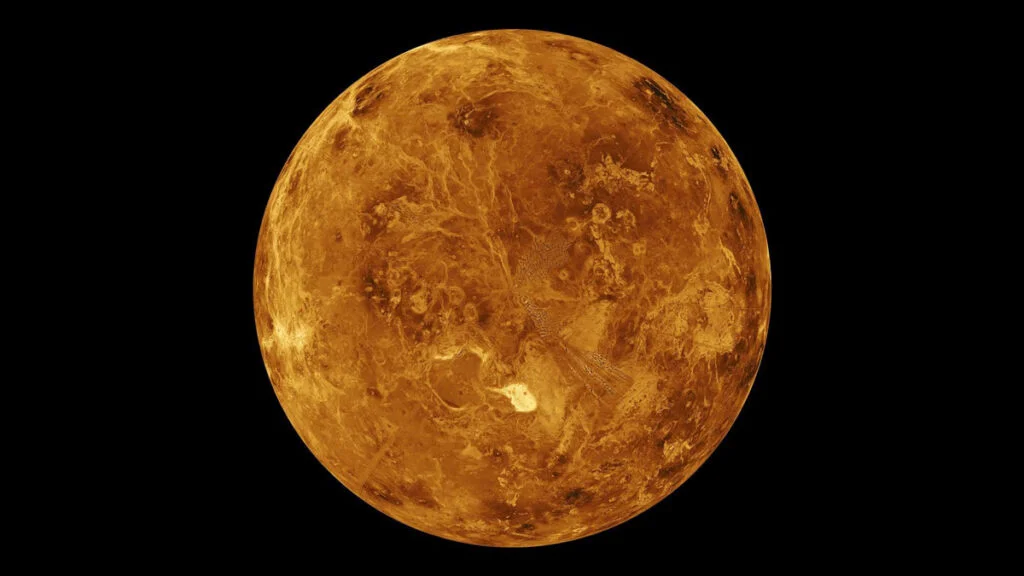
Venus, often viewed as a harbinger of inhospitable conditions, may hold surprises in its sulfuric acid-laden clouds. While the planet's surface experiences scorching temperatures around 467°C (872°F) and extreme atmospheric pressure, research has shifted focus to the upper cloud layers where conditions might allow for the existence of organic molecules and novel forms of life.
A study spearheaded by Massachusetts Institute of Technology’s Sara Seager and her team has started to unearth startling adaptations of amino acids, which are vital for proteins and nucleic acids, highlighting their resilience in concentrated sulfuric acid. These findings suggest that the harsh environment may not be as limiting as previously thought, raising questions about the potential for life forms that could thrive under these conditions.
In their recent publication in the Proceedings of the National Academy of Sciences, Seager’s team revealed that not only do some peptides remain intact in high concentrations of sulfuric acid, but they can also adopt a specific shape known as an omega loop. This unexpected behavior defies previous assumptions that concentrated sulfuric acid would degrade such molecules.
“This shouldn’t even be happening, and yet it does,” remarked coauthor Janusz Petkowski, from Wrocław University of Science and Technology.
The existence of stable peptides suggests the possibility of biochemical functions in environments thought to be too hostile for life as we know it. This research can expand the framework of astrobiology, as it indicates that previously disregarded locations might harbor forms of life that use different biochemistry.
Exploring Omega Loops and Their Implications
Omega loops represent a specific folding pattern for peptides and were long considered exclusive to water-based environments. The researchers tested three peptides under different conditions, discovering that in sulfuric acid, these chains folded into complex loops, a striking deviation from their flat sheet forms seen in aqueous solutions.
Despite earlier findings showing some peptides degrade in these acid conditions, the current study indicates that others remain stable. This contradiction is intriguing and points to a need for further investigation into how various organic compounds behave in acidic solvents.
Martin Rahm, an expert in quantum chemistry at Chalmers University of Technology, commented on the significance of these findings, emphasizing the complexity of the peptides and their ability to assume stable structures in such harsh environments. However, he expressed caution regarding the interpretation of these results, as the methods for identifying the molecular structures may not be fully aligned with the acid-based media.
Though the identification of omega loops raises prospects of biochemical roles, further research is required. Rahm indicated that if all peptides fold into the same configuration, it could undermine the diversity necessary for biological functions as understood in terrestrial life forms.
“From an astrobiological point of view, there could be sulfuric acid in many places and likely on Venus. Understanding what could survive in it would be significant,” Petkowski noted.
Looking Ahead: Chemistry and Potential for Life
The study doesn't yet provide direct evidence for life but it opens an intriguing avenue for future exploration. By examining the structural diversity of peptides in concentrated sulfuric acid, researchers could gain insights into how life might emerge under different chemical conditions, potentially applying these lessons to other celestial bodies.
Petkowski, acknowledging the vast research yet to be conducted, underscored the importance of exploring a wider array of amino acids and their potential configurations, especially those not commonly associated with terrestrial life. The implications are fascinating, suggesting various environments across planets could potentially allow life to develop in forms yet unimagined.
As exploration of Venus continues, understanding the chemistry that might permit life — or at least life-like processes — in such an acidic atmosphere becomes a tantalizing goal for scientists. Each step forward in research could lead to a deeper understanding of astrobiology and push the boundaries of our knowledge about where life can exist.
—Karthik Vinod (@karthikvin2000), Science Writer


Discussion
Sign in to join the discussion.