Paleontologists have discovered a groundbreaking trackway of an adult T. rex in North Dakota, shedding light on the dinosaur's movement and behavior.
Discovery of T. rex Footprints
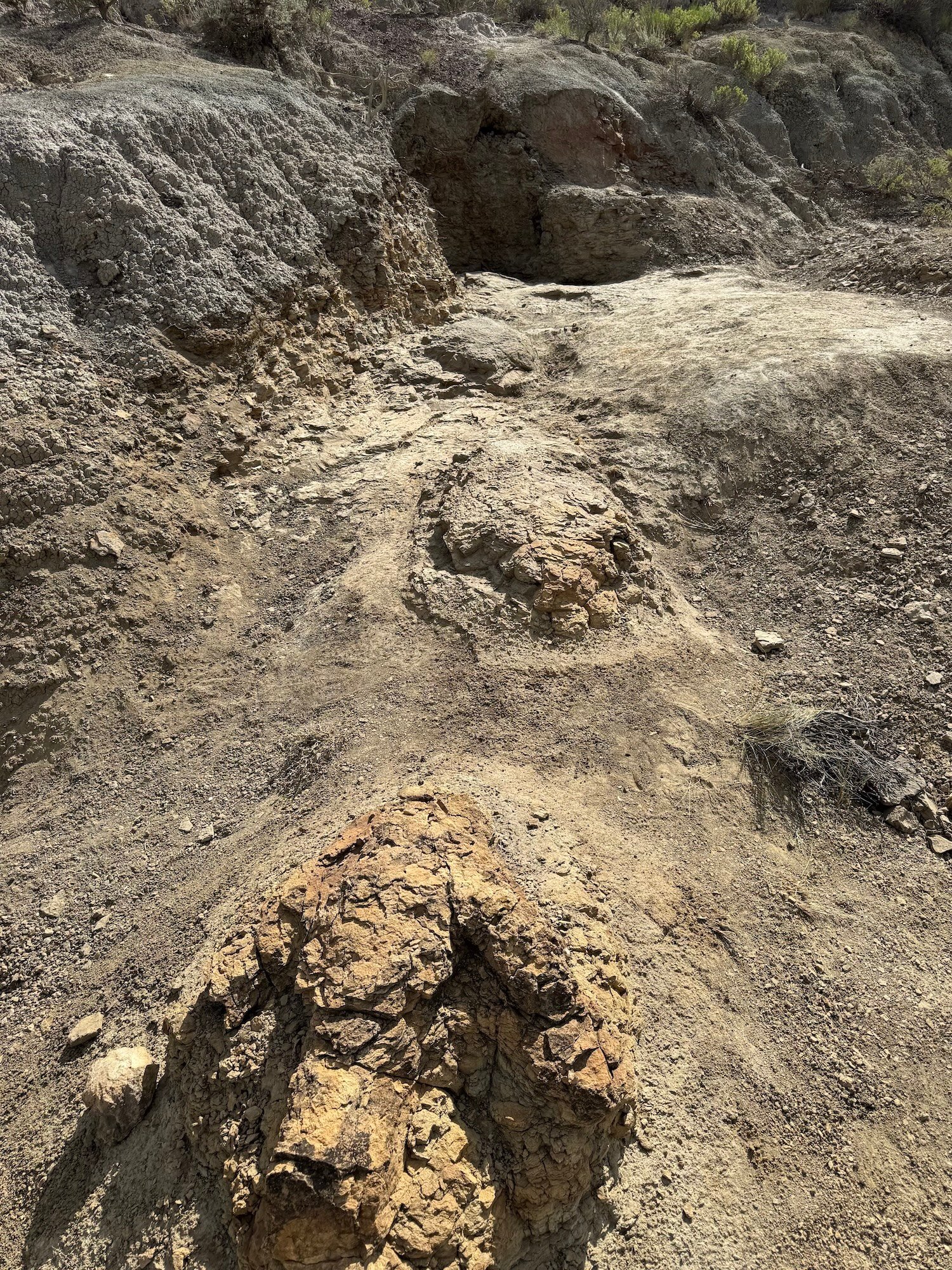
Paleontologists have made a significant find with the documentation of four footprints from an adult Tyrannosaurus rex along a 23-foot trackway in North Dakota's renowned Hell Creek Formation. This marks the first known trackway of a mature T. rex, a detail revealed in a study published in the Journal of Vertebrate Paleontology. The Hell Creek Formation, famous for its rich fossil deposits from the late Cretaceous period, has long intrigued scientists and fossil enthusiasts alike. Its geographic layers tell a story of a world teeming with large reptiles, making discoveries like these particularly exciting.
Characteristics of the Footprints
The tracks, estimated to be around 66.5 million years old, reveal the massive and distinctive nature of T. rex footprints, measuring approximately three feet long. Discovered in 2022 near Marmath, North Dakota, researchers employed high-resolution 3D surface scanning techniques to meticulously image each footprint, enabling detailed digital analysis and the creation of physical replicas. This technological approach isn’t just about preserving a historical artifact; it allows scientists to analyze the morphology of the footprints in unprecedented detail, exploring how these dinosaurs moved through their environment.
Paleontologists' Insights on the Trackway
The trackway comprises two sets of left and right footprints indicating the dinosaur's impressive size, suggesting a stride length of about 13 feet. Interestingly, the T. rex didn’t exhibit high-speed movement; its speed was likely around 3.5 to 4.5 miles per hour—similar to the pace of a fast-walking human—based on the analysis of its gait. This insight contradicts some common portrayals of T. rex as a swift predator, suggesting instead that it may have relied more on ambush tactics and size to hunt rather than pure speed. (and this is the part most people overlook) Understanding these behavioral aspects provides a fuller picture of how these iconic creatures interacted with their ecosystems.
Future Excavation Plans
Plans are in motion to excavate three of the four footprints, with the intention of transporting them by helicopter to the Denver Museum of Nature & Science. Tyler Lyson, a paleontologist with the museum and co-author of the study, emphasized the importance of these footprints in understanding dinosaur behavior: "Bones tell us an enormous amount about these animals, but footprints capture a moment of behavior. With a trackway, we can actually follow an animal as it moved across the landscape, which is incredibly rare for T. rex." This endeavor highlights a growing trend in paleontology: the push to preserve not just bones, but evidence of behavior that can tell us how these creatures lived.
Broader Implications of the Discovery
This discovery can reshape existing narratives about T. rex behavior and physiology. While fossils provide concrete evidence of their anatomy, trackways offer a dynamic aspect of how these animals interacted with their surroundings. The findings could influence how we teach about dinosaurs in educational settings, from elementary schools to university-level courses, emphasizing behavioral ecology alongside anatomical studies. If you're working in this space, consider how this evidence might affect future research avenues, possibly shifting more focus to such fossilized behaviors rather than relying solely on skeletal reconstructions.
Significance and Future Outlook
The implications of these findings extend beyond mere academic interest. For scientists, this type of information is invaluable, allowing them to refine existing models of dinosaur locomotion and behavior. As excavation plans proceed, the excitement surrounding these footprints may also drive public interest in paleontology and conservation. Museums like the Denver Museum of Nature & Science are poised to amplify this enthusiasm through exhibitions that showcase not only the footprints but also the processes and technologies involved in their study. The future of paleontological research may well depend on effectively blending new technologies with traditional methods, shedding light on the life and times of creatures long gone.


Discussion
Sign in to join the discussion.