Research links sheep grazing at solar farms to more beneficial insects, while Alberta’s siting rules have slowed new renewable projects.
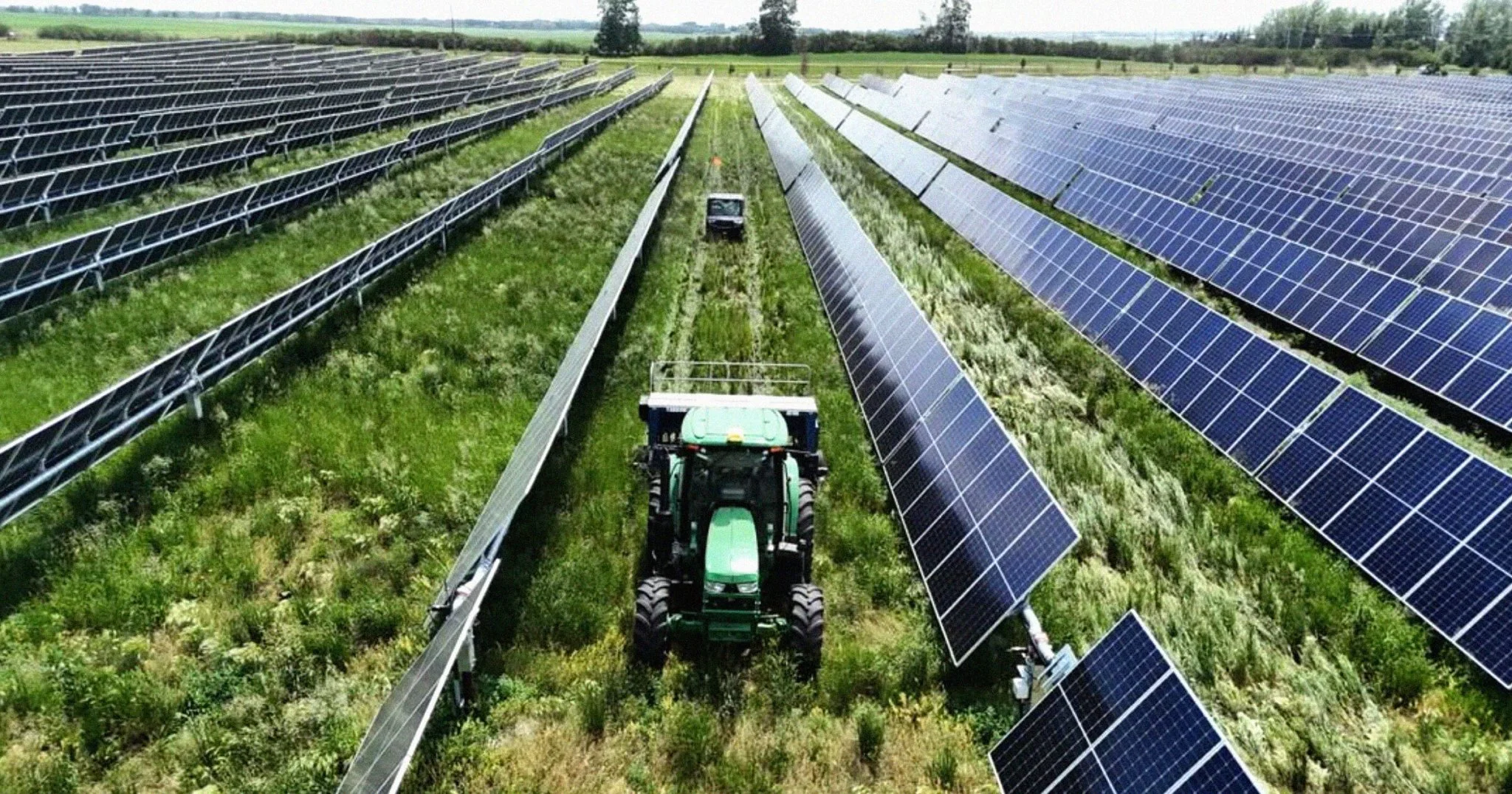
Alberta’s solar rules may be blocking projects that pair electricity generation with working farms and stronger pollinator habitat. A 480-acre operation in southern Alberta shows what that combination can look like: solar panels, sheep grazing and an apiary on the same property. The example matters because debates over renewable energy siting often treat agriculture, habitat and power generation as competing uses of land. Here, they share it.
Solar panels and grazing share the land
Mark Owerko developed the project on land near a transmission line, a location suited to connecting a solar farm to the grid. After eight years, the property had become a solar plant alongside sheep pasture and beekeeping, according to the Calgary Herald report. That arrangement doesn’t mean every farm can support a solar installation, or that the same mix of activities will work everywhere. It does show that a solar project needn’t automatically end agricultural use across the land it occupies.
Grazing can be a practical way to manage vegetation around solar panels, while keeping livestock on the property. The details matter: animals need suitable forage and access, and the site has to be arranged so grazing can coexist with the equipment. An apiary adds another use, tied to the condition of the flowering plants and habitat around the installation. None of this makes the work effortless. It does make the land-use question more specific than a simple choice between a farm and a power plant.
Research published in Environmental Research Letters offers a reason to pay attention to that model. The study found that grazing two sheep per hectare around solar installations was associated with a 38 percent increase in the abundance of bees and beneficial beetles. Honey bee numbers in nearby areas were 83 percent higher than around solar farms where vegetation was mowed by hand. Those findings concern the conditions examined in the study; they don’t establish that every grazed solar site will produce the same results.
Still, the comparison points to a management choice with consequences beyond the pasture. Mowing keeps vegetation down, but grazing may also affect what grows and how habitat develops around a solar installation. The study’s reported differences give researchers and developers something concrete to examine, though the figures alone don’t explain every cause or settle how the approach would perform across different sites.
Lead author Leana Zoller told the Cornell Chronicle that sheep grazing and habitat for beneficial insects are prominent topics in discussions about solar development. The findings suggest those goals can coexist with power production. That’s a useful claim, but it’s narrower than a promise that solar development will reliably improve local ecology. Site conditions and management still matter.
Alberta’s rules have narrowed the path
Owerko’s project was among the last approved in Alberta before the province imposed a seven-month pause on new wind and solar development. The Herald reports that current restrictions on renewable energy projects on agricultural land, including rules intended to preserve “pristine viewscapes,” make similar projects difficult to approve. For developers, that means the question isn’t only whether a project can share space with farming. It’s also whether the rules leave room to propose that kind of project in the first place.
Land-use rules involve choices about what communities want to protect and where infrastructure should go. Restrictions can shape which sites are viable, and a policy aimed at preserving views can affect projects even when agricultural activity continues alongside energy production. The available reporting doesn’t establish how any particular application would fare under the current rules. But it does show why the design of those rules matters: broad limits may treat very different proposals alike, even when their effects on farmland and habitat differ.
Owerko told the paper the moratorium damaged power prices and drove investment away. That’s his assessment of the consequences, and it reflects the perspective of a project developer. Jorden Dy, director of the Business Renewables Centre of Canada, described a wider gap: renewables are being added to grids at an accelerating pace elsewhere in the country, while Alberta is seeing a “complete slowdown.” Together, those comments frame the dispute as more than a question about one farm. They point to uncertainty over whether Alberta can attract projects while maintaining its chosen limits on where they can be built.
What the example means for future projects
This is more significant than it looks: the farm offers a practical case for asking whether siting policy can distinguish between projects that displace agricultural use and those designed to keep some of it in place. It doesn’t prove that agrivoltaics—combining solar generation with farming—can resolve Alberta’s broader energy debate. It does give the debate a concrete example, alongside research that connects grazing practices with measurable differences in insect abundance.
If you’re working in this space, the relevant questions are operational as much as political. Can grazing be managed safely around the equipment? Does the land support the intended agricultural activity? What happens to vegetation and habitat under the proposed management plan? Those details would shape whether the model makes sense at another site. A single successful property can’t answer them for the province.
And this is the part most people overlook: a project’s value may depend on how it uses the land between the panels, not only on how much electricity it produces. That said, the ecological findings shouldn’t be treated as a blanket endorsement of all solar installations. The reported results are evidence about a particular approach, and careful planning would still have to account for local conditions.
Whether Alberta can revive solar investment remains uncertain. The case raises a practical question for communities weighing land use: can siting rules account for projects that produce electricity while keeping agricultural activity and wildlife habitat on the land? The research and Owerko’s farm suggest that the answer can matter both to local ecology and to the pace of renewable development. The policy challenge is deciding whether those combined uses deserve a clearer route through approval, and what evidence should guide that decision.
Not a universal template. A test case.
More on solar energy: Venture Capitalists Disgusted by Solar Power Because It’s Generating Too Much Clean Electricity to Be Grossly Profitable


Discussion
Sign in to join the discussion.