Altman says AI has overtaken the brightest scientists. OpenAI’s disputed math claims leave questions about how useful that output is in practice.
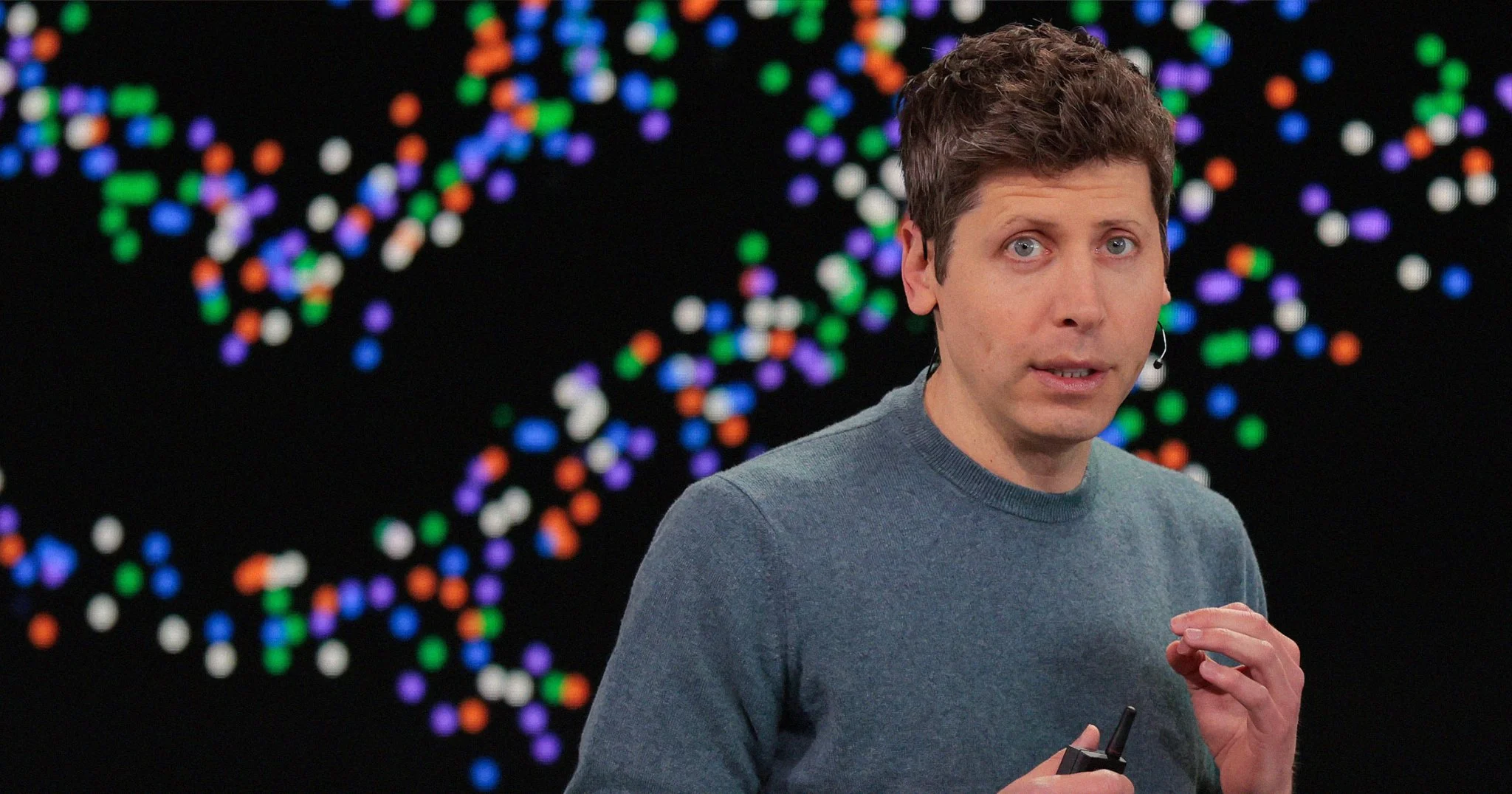
Sam Altman’s claim that AI now outthinks the brightest scientists lands at a tense moment for OpenAI’s relationship with researchers. At a conference in Abu Dhabi, the CEO argued that people must retain control of AI’s future, while saying the technology has already moved ahead of top scientific minds. Those two positions can sit together in principle: a system might outperform people on some tasks while still requiring human direction. But the claim raises a practical question about what kind of oversight is meaningful if the systems being overseen are said to be smarter than the experts. The gap between that sweeping assessment and the work researchers can actually evaluate is where the debate sits.
A fast shift in Altman’s assessment
“At the start of this year, ‘AI was mostly not as smart as our smartest scientists. And now it’s mostly smarter than them,’” Altman said in a conversation with the editor-in-chief of UAE newspaper The National. The statement describes a sharp change in capability over a relatively short span, but it doesn’t identify the scientific fields, tasks or measures behind that comparison. His remarks arrive amid broader arguments over whether AI systems can match expert human reasoning, a question that’s difficult to settle with a single label such as “smarter.” Scientific work includes more than producing a plausible answer: researchers also choose questions, judge evidence and explain why a result should be trusted.
OpenAI has made ambitious comparisons before. When it released GPT-5 last year, the company described its intelligence as equivalent to “PhD-levels,” a claim that drew skepticism. That comparison, like Altman’s latest one, can sound precise while leaving the test itself unclear: expertise varies by subject, and performance on a bounded task doesn’t automatically demonstrate the broader judgment associated with a scientist. Altman has also repeatedly predicted that AI will surpass human intelligence by the end of the decade. His latest statement puts that milestone much closer, though he offered no evidence at the conference to establish how “smarter” should be measured. Here’s the thing: a striking claim can focus attention on progress, but it can’t substitute for a standard that other researchers can inspect.
Math claims put the comparison under pressure
OpenAI’s recent mathematical work offers a test case. The company said it had solved a version of the Navier-Stokes equations, a problem associated with the Millennium Prize Problems that no human mathematician had solved. The announcement drew criticism after a mathematician accused OpenAI of using his research unfairly, renewing questions about how the company engages with the mathematical community. The episode puts two different issues side by side: whether an AI result is correct, and whether the process used to produce or present it meets the expectations of the people whose field is being invoked. Neither question can be settled by the claim of a solution alone.
OpenAI then published hundreds of studies describing purported solutions to additional math problems. Some prominent mathematicians objected that researchers were being left to check a large volume of AI-generated work while the company presented the results as evidence of its models’ intellectual ability. That imbalance matters. Verification takes expertise and time, and a large collection of claims can place much of the initial checking burden on people outside the company. If you're working in this space, the distinction is familiar: the volume of output isn’t the same as the amount of knowledge a field can reliably absorb.
Even if a proposed solution is technically correct, that alone doesn’t show it can advance research. The language in some AI-generated proofs has been described as borderline incomprehensible, leaving researchers with the burden of working through arguments that may take years to assess. A proof has to do more than reach a conclusion; its steps need to be clear enough for others to check and, where useful, extend. When that clarity is missing, researchers may have to spend substantial effort reconstructing the reasoning before they can judge its significance. Until that work is done, the practical value of the output remains uncertain. Correct, perhaps. Useful to the field? That’s a separate test.
Capability claims need usable evidence
Altman’s appeal for human oversight sits awkwardly beside his assertion that AI has already surpassed leading scientists. The claim may reflect progress in certain tasks, but broad comparisons across scientific judgment and problem-solving demand more than a company’s headline results. OpenAI’s math announcements have made that distinction hard to ignore: producing answers is one measure; making them clear, verifiable and useful to the field is another. This is more significant than it looks, because scientific capability is judged not only by what a system can produce but also by whether other people can test and build on it.
That said, difficulty checking a result doesn’t prove it’s wrong, and unclear writing doesn’t by itself erase a possible discovery. It does, however, limit what outsiders can responsibly conclude about the system’s ability. Researchers need to know what was asked, what assumptions shaped the work and how the reasoning supports the answer. Without that context, a public demonstration may show that a model can generate an impressive-looking result, while leaving open whether it can perform the more demanding work of making that result dependable.
What researchers and the public should watch
For now, the central question isn’t just whether AI can generate work that appears to solve difficult problems. It’s whether independent researchers can understand and validate that work well enough to build on it. The answer will depend on evidence that can survive scrutiny beyond the company making the claim: clear arguments, meaningful checks and enough detail for others to assess what the system actually contributed. Those standards don’t settle every debate about intelligence, but they give the discussion something firmer than a sweeping comparison.
And this is the part most people overlook: oversight depends on access to work that can be examined. If researchers can’t readily interpret a system’s output, human control may exist in theory while practical evaluation remains slow and difficult. The coming debate will turn less on whether AI can sound like an expert and more on whether its work can enter the ordinary process of scientific checking. For readers outside research, that’s the useful distinction: a claim of superior ability is not yet evidence that the technology can reliably help science progress.

Discussion
Sign in to join the discussion.