A remarkable new fungus species, Dianjunus rex, discovered in China, pushes the boundaries of fungal growth and highlights biodiversity challenges.
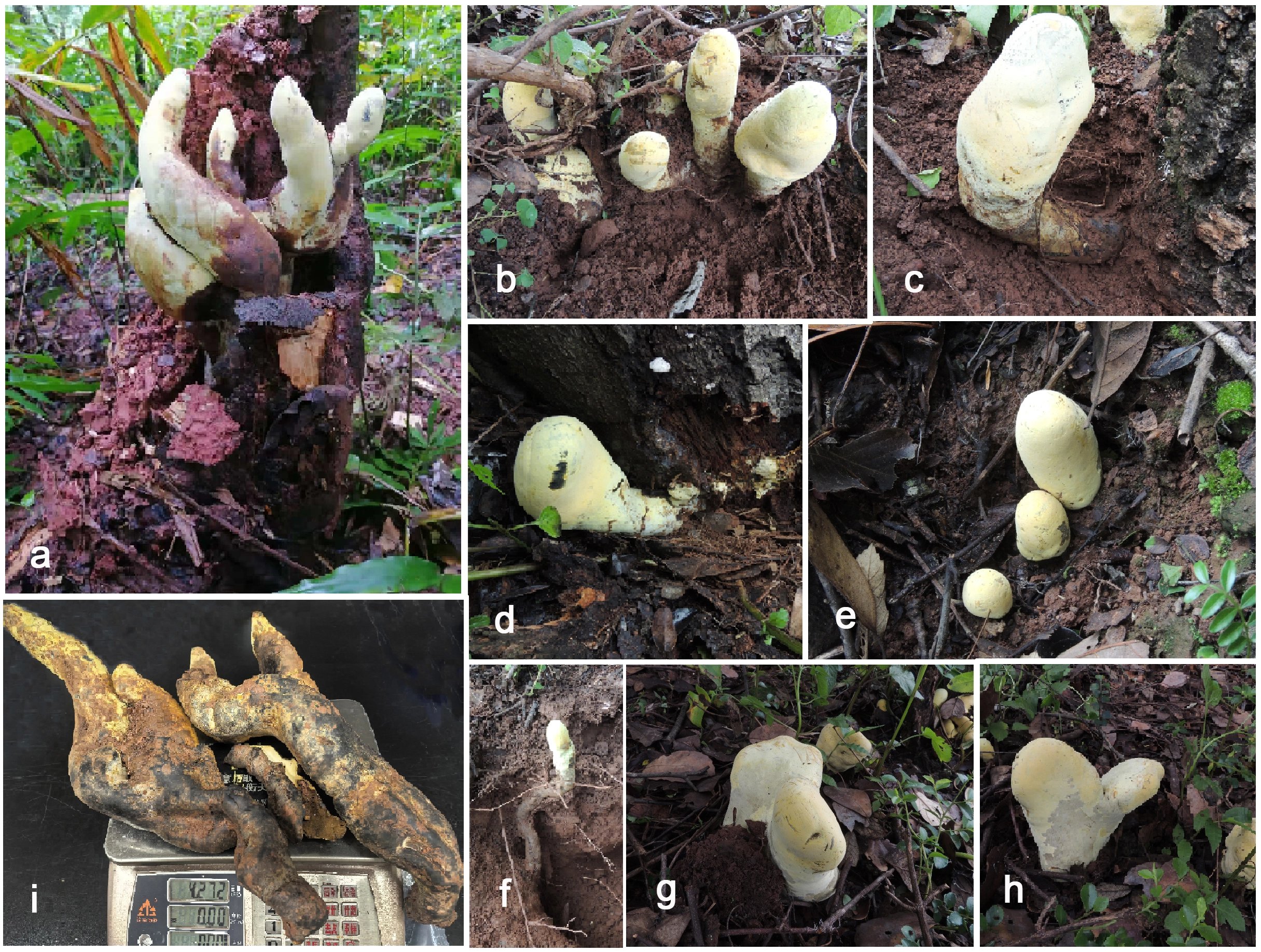
Exploring the New Discovery
The world of fungi continues to surprise us, with recent findings pushing the envelope in size and diversity. A team of researchers in Yunnan, southern China, has documented a new species called Dianjunus rex, amplifying our understanding of fungal growth. This discovery not only sheds light on the species itself but also raises questions about the ecological roles that such large fungi play in their environments.
Fungal Giants: Size and Significance
This newly classified fungus boasts vertical fruiting bodies reaching up to a foot in height (about 50 centimeters) and weighing nearly five pounds (approximately 2.2 kilograms). This makes it the largest known species within the Ascomycota phylum, which includes over 64,000 identified species. The implications of such size are manifold. For one, it challenges our existing notions of fungal growth and its limitations. It's rare to find organisms of such substantial mass in the fungal realm, prompting a reevaluation of the conditions that allow for such growth.
Research Insights and Areas of Study
Published in the journal Frontiers in Fungal Biology, the research reveals significant details about this striking organism. Co-author Indunil C. Senanayake, a mycologist from the Germplasm Bank of Wild Species at the Kunming Institute of Botany, emphasized the discovery as a rare insight into the evolution of extreme fungal body forms. “The discovery illustrates how much fungus biodiversity remains to be uncovered in East Asian forests,” he remarked. This statement isn't just a reflection of the current state of research; it suggests that we are likely only scratching the surface of understanding fungal biodiversity in these rich ecosystems.
Fieldwork in diverse environments, including temperate coniferous forests near Damaidi and Yipinglang, along with a tropical rainforest close to Nanbang, allowed the team to identify the unique whitish fruiting bodies, called stromata, emerging from fallen wood. The fact that this species thrives in varying climates emphasizes its adaptability and resilience. Such environmental versatility highlights how fungi can occupy ecological niches that may otherwise remain unexplored.
Unique Biological Features
Unlike typical mushrooms, Ascomycetes, like D. rex, disperse spores from unique, sac-like structures, often found on woody roots of Chinese cork oak trees. The team went on to cultivate the collected stromata's spores in the lab to analyze the fungus’s morphological traits and genetic makeup. This morphological study is critical. It might reveal not just how D. rex grows but also inform us about its evolutionary lineage and how it might interact with other species in its habitat.
Named for its impressive stature and the ancient Dian kingdom, which thrived in Yunnan during the second and first centuries BCE, Dianjunus rex (shortened to D-rex) also carries a nod to its larger-than-life homophone, T. rex. This naming not only contextualizes the species historically but also serves as a reminder of the intersection between biodiversity and cultural heritage, which is often overlooked in scientific classifications.
The Evolutionary Context
This fungus's family is believed to have emerged approximately 65 million years ago, closely following the Cretaceous-Paleogene extinction event that decimated the dinosaurs and many other species. Senanayake points out that this timing could suggest that significant environmental changes, including a surge in available dead plant material, created new ecological niches for fungi. This historical framework reveals a potential link between massive extinction events and the evolutionary pathways of fungi that allowed them to thrive in the aftermath—showing that life often finds a way to adapt and evolve, even in the face of catastrophic changes.
Interestingly, D-rex's significantly larger fruiting bodies may enhance wind dispersion of spores in dense forest conditions. However, such size demands considerable energy investments. The research team theorizes that, under certain ecological benefits, these energy costs could be justified. In essence, the trade-off between size and energy efficiency may be a delicate balance maintaining the survival of this impressive organism.
The Broader Implications
This discovery underscores the potential for more fungi to be identified in subtropical regions of China, reminding us of the vast unknowns that still exist within our natural world. The multitude of undiscovered species could have implications ranging from ecological balance to potential applications in medicine and agriculture.
What this means for you, if you're working in this space, is that there's much more to learn and explore. The findings suggest that every expedition into unexplored regions may reveal new species that can further challenge or enrich our understanding of fungal roles in ecosystems. The questions surrounding D. rex are not just about what is known, but what remains hidden, waiting to be uncovered.
The post Scientists Identify Enormous New Fungus Species, Dianjunus rex, in Southern China appeared first on Popular Science.



Discussion
Sign in to join the discussion.