Paleontologists have unearthed Kayrasaurus changliensis, a massive therizinosaur with an unusual dental structure, in northeastern China.
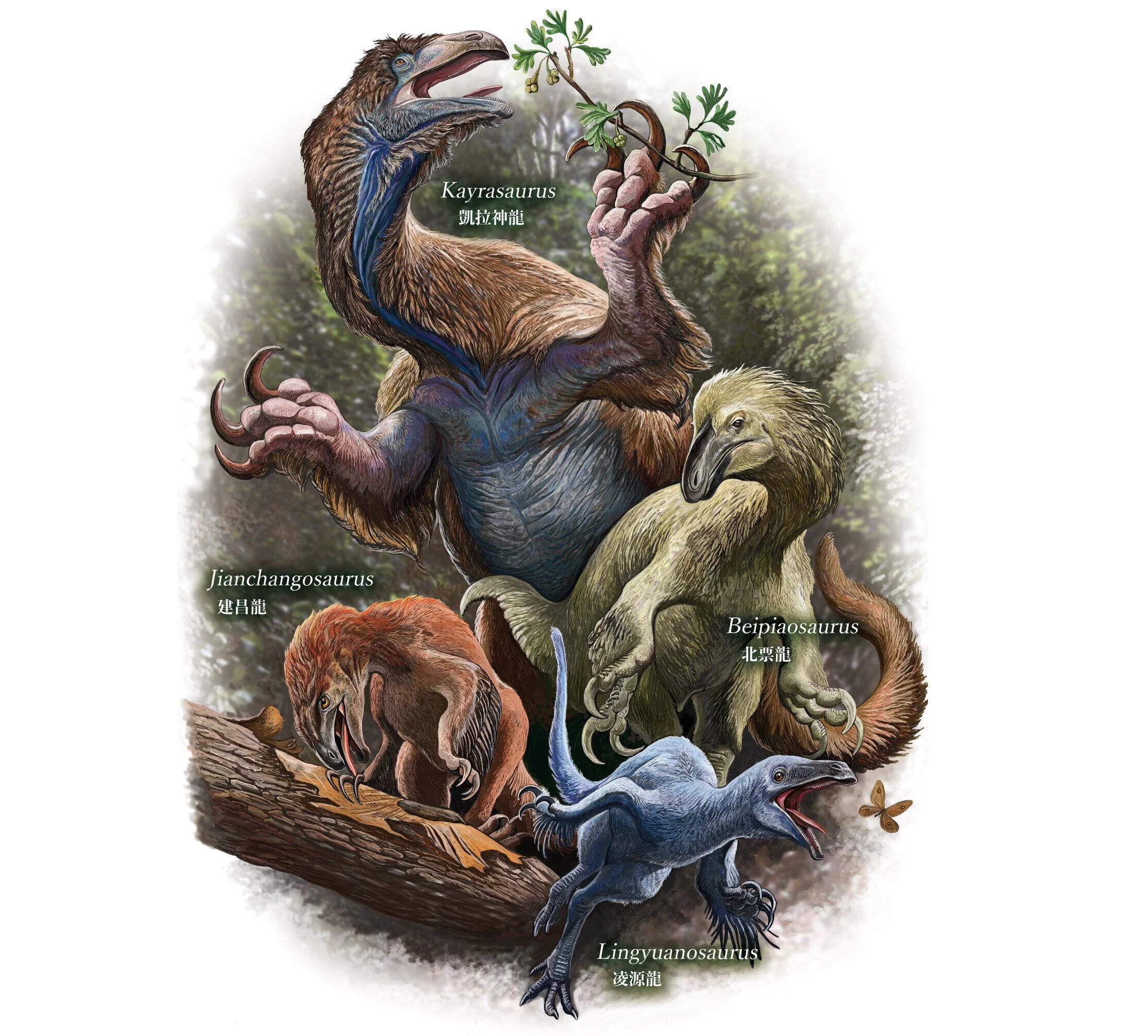
Dinosaurs often spark an image of strange, almost fantastical creatures, but few are as unusual as the newly identified Kayrasaurus changliensis. In research published in The Journal of Systematic Paleontology, scientists present this particular therizinosaur as a potential record-holder for size and peculiarity within its category.
Therizinosaurs: A Unique Group
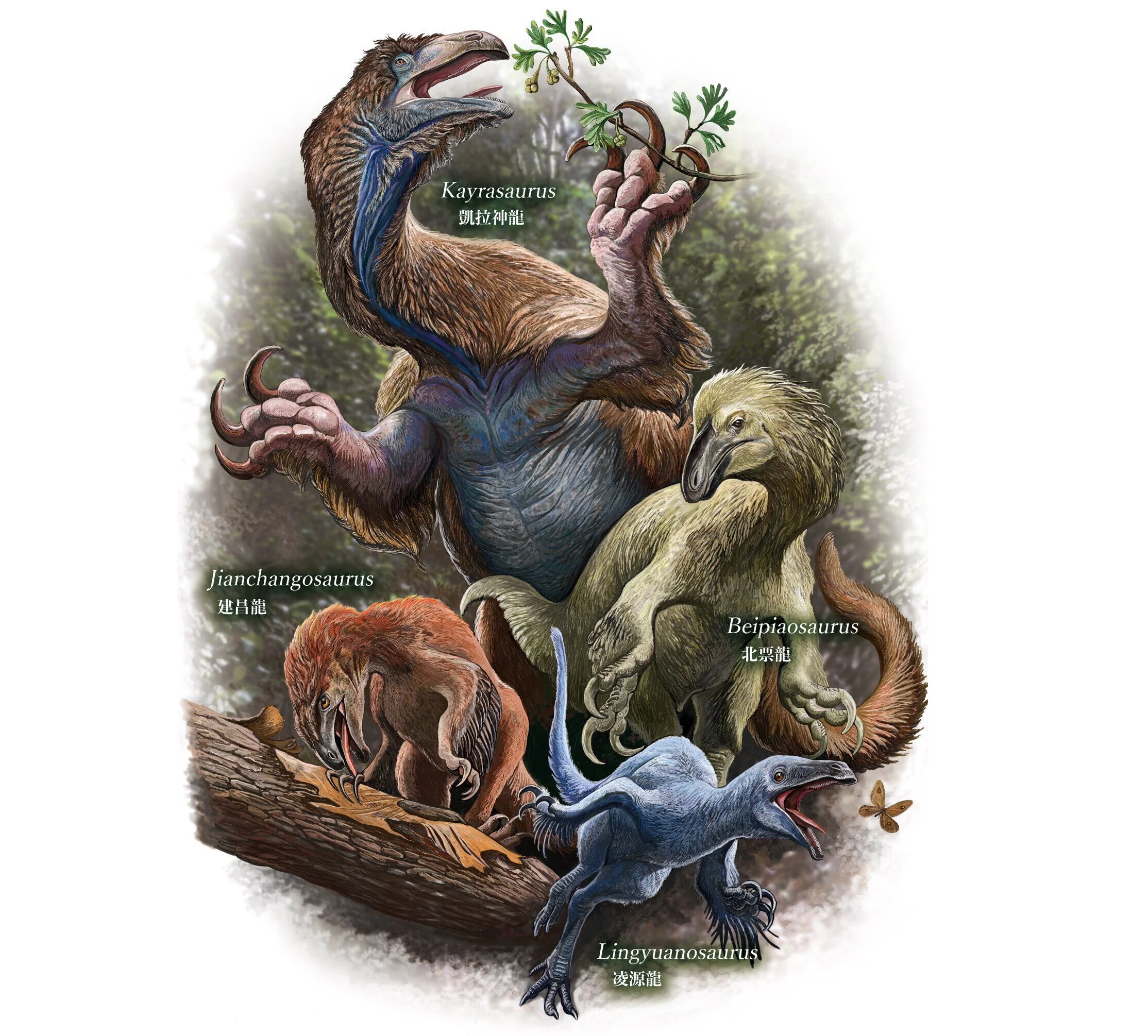
Therizinosaurs stand out even among the diverse array of theropod dinosaurs, which typically include both carnivorous giants like Tyrannosaurus rex and some plant-eaters. These creatures present one of the most curious evolutionary branches within the dinosaur kingdom. Notable for their disproportionately large claws, which can exceed three feet in length, these feathered dinosaurs offer a striking blend of features, resembling an odd mix of an ostrich and a hefty bear. Their unique physiology raises questions about their adaptations and lifestyles, as the combination of such claws and a presumably herbivorous diet is particularly uncommon in ancient ecosystems.
These creatures roamed Earth during the Late Cretaceous period, approximately 100 to 65 million years ago, and would be among the last of their kind before the mass extinction that ended the age of dinosaurs. The existence of therizinosaurs challenges our preconceived notions about the dietary habits of large dinosaurs, as they occupy an unusual niche in a world where most theropods were hunters.
Kayrasaurus changliensis: Size Matters
The discovery of K. changliensis in the Yixian Formation of northeastern China marks a significant finding for paleontologists. This dinosaur is believed to weigh between 250 and over 600 pounds, comparable to an adult male grizzly bear, stretching nearly 12 feet long, roughly the length of a compact moving truck. Given its size, K. changliensis represents not only a substantial member of its family but also an intriguing case for understanding the evolutionary pressures that led to such large sizes in herbivorous dinosaurs.
This specimen, although not fully matured, hints that adult K. changliensis may have grown even larger. Notably, it exceeds the dimensions of another significant therizinosaur, Beipiaosaurus inexpectus, by about 60%. The size disparity raises intriguing questions about ecological competition and available resources during its time, particularly in relation to other herbivore species that might have coexisted.
Distinctive Features of K. changliensis
What sets K. changliensis apart is not just its sizeable form but also its dental construction. Its jaw features a heavy underbite with an abundance of tightly-packed, small teeth—45 on the lower jaw and 32 on the upper jaw. This is unusual since most other large therizinosaurs sport no more than 40 teeth in total. This unique dental arrangement suggests a specialized feeding mechanism, potentially allowing it to process tough vegetation more efficiently than its relatives. Such adaptations could have played a vital role in its survival amid a complex array of competing herbivores.
Moreover, its jaw structure includes distinctive triangular openings on the sides, a feature whose evolutionary significance remains unclear to researchers. These openings could suggest different muscular attachments or adaptations for feeding behavior, but their precise function is still debated. The niche this dinosaur occupied hints at a more diverse array of feeding strategies among therizinosaurs than previously recognized.
A Different Lifestyle for K. changliensis
Considering its hefty body, K. changliensis was likely less agile than its smaller therizinosaur relatives. Its anatomy suggests it was built more for stability and strength than for speed. While we may envision fearsome predators among dinosaurs, research indicates that K. changliensis was primarily herbivorous. Its size and dental characteristics reinforce the idea that it played a distinct ecological role, focusing primarily on consuming plants rather than engaging in predatory behavior.
A study highlights that this dinosaur's dental attributes are more consistent with herbivorous clades, dispelling any notions it would have hunted other dinosaurs. Thus, it seems K. changliensis would’ve focused on a plant-based diet, contrary to the thrilling scenes depicted in films like Jurassic World Dominion. This disconnect between popular media portrayals and the scientific reality is significant; it underscores the public's fascination with dinosaurs while often oversimplifying their behaviors.
The insights gathered from this new discovery pave the way for a richer understanding of therizinosaurs and their diverse adaptations. As researchers continue to analyze the implications of K. changliensis, we may uncover more about the evolutionary pathways that led to these odd, fascinating creatures.
Implications for Paleontological Research
The implications of identifying K. changliensis extend beyond mere size records; they challenge existing frameworks in our understanding of theropod evolution. This discovery could influence how we categorize similar species and rethink functional morphology within theropods. If you're working in this space, the recognition of such diversity among herbivorous dinosaurs may necessitate a reevaluation of ecological roles and interactions in prehistoric environments.
There's also a broader significance. Each new species adds layers to the narrative of dinosaur evolution, pushing back against the idea that these ancient creatures were a homogenous group defined solely by predatory behavior. As more discoveries come to light, the complex tapestry of dinosaur life becomes clearer—showing that they were a diverse lot, encompassing a range of diets and adaptations.
As paleontological techniques and technologies improve, we can expect more astonishing revelations about how dinosaurs lived, interacted, and evolved. This is an exciting time for the field, reminding us that while some aspects of paleontology may be settled, many questions remain open. This ongoing research ensures that the story of dinosaurs like Kayrasaurus changliensis isn't just a footnote but a key chapter in understanding life on Earth millions of years ago.


Discussion
Sign in to join the discussion.